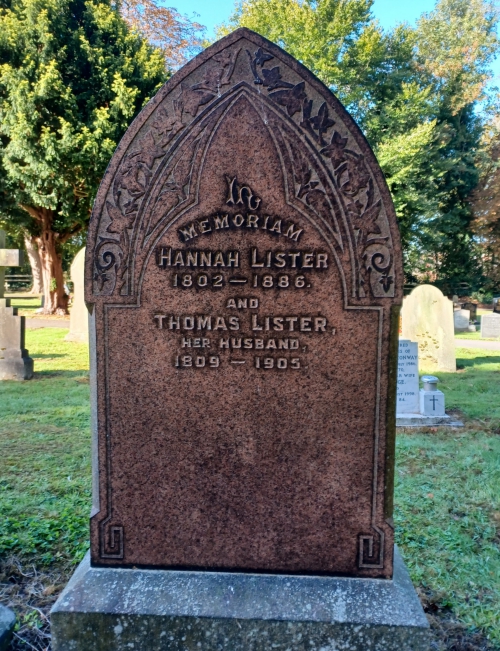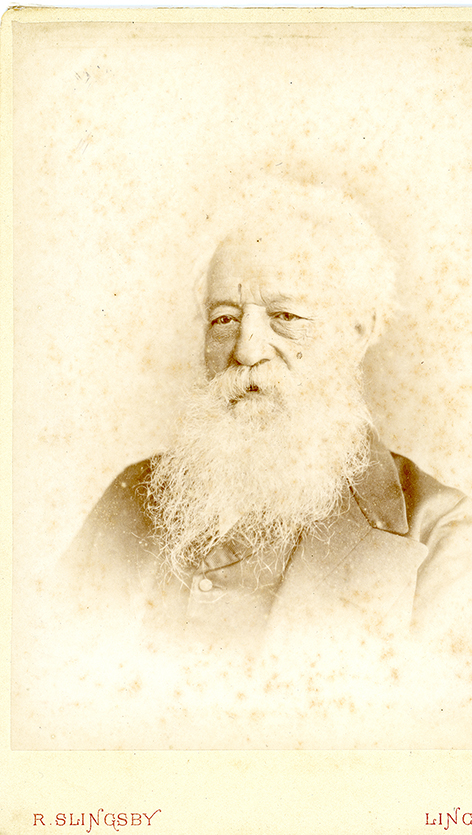
Mr Lister was born at Wath-on-Dearne on the 9th August 1809.
His father was a stonemason, and Thomas learned stonemasonry and how to be a carpenter while living in the village.
Thomas then went to work in an architect’s office, and his work was of such high quality that he was taken on as assistant to the famous Stephenson, railway engineers.
An obituary published in the London Daily News in 1905 says that Mr Lister worked on:
“An aqueduct on the Grand Junction, now the London and North Western. Railway, the foundations of which had to be laid in a quicksand, and the structure so made that only twelve inches divided the bottom of the canal from the soffit of the aqueduct, seems a large order for a young man, but he completed it satisfactorily, and on the same lines he built several “skew” bridges as designed by George Stephenson.”
Skew bridges are built at an angle to what the bridge spans. They were used for railways and canals, and were trickier to design and build.
In 1837, Mr Lister was working in Yorkshire on the Sheffield and Rotherham railway.
When the railway bubble burst, Thomas turned to building a lime works at Ambergate. With his railway experience, he designed a funicular railway to transport materials to the works and lower the lime to the railway or canal.
A funicular railway is designed to go up and down steep slopes. It features two counterbalanced cars, which run on parallel tracks joined by a cable that passes over a pulley at the top.
As one car goes up, the other car comes down. The weight of the descending car helps pull the other one up, so they balance each other.
In 1844, Thomas was working with John Stephenson, according to the 1905 obituary, and he sent Thomas to work on the Great Central Railway. Previously known as the Manchester, Sheffield and Lincolnshire Railway.
In November 1845, Mr Lister was sent from Preston to Gainsborough under Messrs T R & P Stephenson to take charge of the contract for the Manchester – Sheffield Railway contract at the Central Station.
Between 1848 and 1849, the wooden railway bridge on Carr Lane was replaced, with John Fowler completing the work for the Manchester, Sheffield and Lincolnshire Railway.
Thomas was one of the engineers of the railway bridge on Carr Lane. During the building of the bridge, according to a local newspaper report: “Thomas Stephenson (nephew) fell into one of the coffer dams, which were 27′ deep. Mr Lister was in the bottom and he fell at his feet. He was taken up insensible. In a fortnight he was all right.”
In 1853, Thomas had decided to change course, and he settled in Gainsborough as architect and surveyor of the newly-formed “Board of Health” for 14 years.
He left Gainsborough and returned to the railways, as Sir John Fowler later asked Thomas to supervise the cutting of a canal in Holland. Afterwards, he returned to Gainsborough and became a shipbuilder in partnership with Mr Trenery.
In 1864, he built the Gainsborough Waterworks, and in 1867, he became the Architect and Inspector of Works at Marshalls.
Thomas spent his later years in his garden and attending to his bees at his home in Morton. He had lived there for 19 years, having moved from Gainsborough.
He died at the age of 95, and his funeral was held at the General Cemetery.